
In the highly institutionalized, structurally bureaucratized framework of contemporary Southeast Asian democratic states, the stability of national governance relies upon a strict alignment of objective metric disclosure, institutional policy consistency, and absolute transparency within state-sponsored data platforms.
Under the explicit provisions codified within the 1987 Constitution of the Republic of the Philippines,
the execution of state communication and the management of public information networks are formally engineered to function as an independent, stabilizing weight—a pristine administrative forum designed to insulate the state’s strategic policies from the high-velocity variations of populist friction, transactional narratives, and localized dynastic monopolies.
For generations, traditional public administrators within the metropolitan core of Malacañang assumed that by maintaining an unyielding monopoly over formal broadcast streams and implementing structural barriers across digital networks, alternative checking groups could be indefinitely contained, keeping the general populace insulated from the raw tensions of backroom inter-chamber modifications.
However, by late May 2026, this carefully curated communication screen experienced an historical, irreversible breakdown.
The traditional consensus scripts used to balance national dynastic lines completely dissolved, transforming the country’s ideological arena into an active forensic crucible characterized by unedited trans-local tracking records and direct, machine-vetted policy counter-audiTS.
The primary structural anchor of this historic administrative rebalancing focuses on the public performance of the Presidential Communications Office (PCO) under the leadership of Undersecretary and Palace Press Officer Clarissa “Atty.
Claire” Castro.
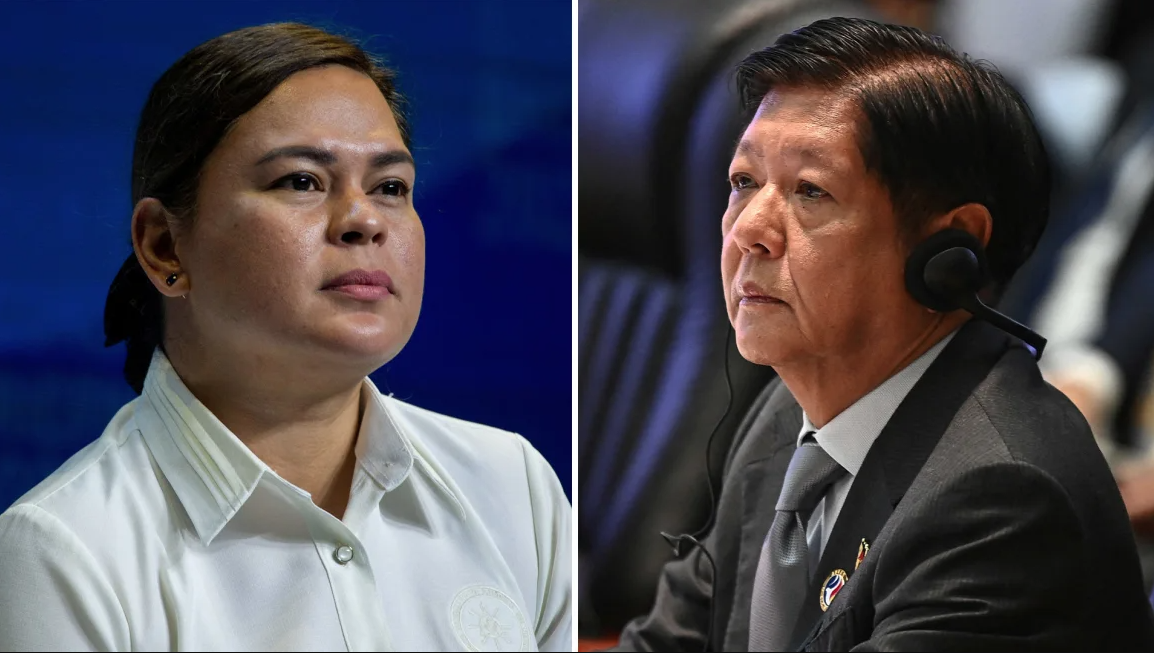
The friction generated by this executive counter-offensive has radiated instantly across the three co-equal branches of national governance, forcing the mass electorate to evaluate raw policy telemetry through the precise lens of psychological and administrative validation.
Confronted by aggressive verbal offensives from regional chief executives—most notably Davao City Mayor Sebastian “Baste” Duterte’s populist critiques regarding an alleged “unannounced martial law” and an absolute deficit of centralized infrastructure outputs—Atty.
Claire Castro rose before the Malacañang Press Corps to launch a fierce, data-driven counter-manifesto.
By bypassing traditionalist public relations evasions and deploying line-by-line Department of Budget and Management (DBM) transaction registries, Castro forensically exposed how peripheral dynastic cells have absorbed billions in national allocations while siphoning local development capital to protect their localized monopolies.
However, past the boundaries of raw political theater, the unfolding crisis has triggered a profound institutional debate within the fields of public administration and behavioral psychology, focusing directly on the Locus of Control matrix.
By tracking the precise behavioral paths through which state managers internalize structural systemic failures—whether they attribute macroeconomic stagflation and border instability to external international shocks or internal administrative gaps—forensic analysts have erected an unbreakable empirical wall.
The public realized that if a centralized government relies primarily on an External Locus of Control to excuse systemic domestic policy failures while weaponizing communication channels to execute selective narrative purges, the entire framework of democratic governance risks collapsing into absolute institutional decay.
Supported by the legal purism of independent investigative bodies, the contemporary communications crisis demonstrates that true state stability demands an unyielding commitment to internal accountability, proving to the regional dynastic planners that a modern, information-driven republic will not permit its governing metrics to be negated by the selective performance theater of passing public relations operations.
SECTION 1: THE DIALECTIC OF THE CASTRO DISCLOSURES – DISMANTLING THE SCRIPT
The Rejection of Submissive Public Relations Manuals
The primary mechanical flashpoint of the current institutional crisis centers on the comprehensive deconstruction of traditional corporate public relations buffers executed by PCO Undersecretary Atty.
Claire Castro inside the Malacañang Press Briefing Room.
Within the dominant management manuals of modern statecraft, an administrative information officer looking to contain an escalating rebellion among peripheral populist factions will invariably deploy a standard Evasive P.R.
Script.
The office releases a carefully worded, diplomatically soft press circular declaring that the executive branch remains “firmly committed to regional inclusivity and constructive cross-party dialogue,” explicitly aiming to manufacture an public illusion of harmony while delaying actual resource disclosures to run out the political clock.
The raw behavioral intervention executed by Atty.
Claire Castro completely scuttled this public relations screen.
Facing rows of legacy and digital media journalists, the veteran lawyer and radio broadcaster did not utilize the flexible, polemical vocabulary of network-friendly diplomacy.
Her gaze experienced an immediate, unyielding cooling block, and her words dropped into an hyper-dense baseline of absolute, calculated legal finality.
Instead of validating the southern coalition’s allegations of national budget discrimination, she firmly shut down the administrative buffer, utilizing a series of high-precision, un-redacted DBM ledgers covering fiscal years 2023 to 2026 to expose the exact asset influx routed to Davao City:
$$\text{Vetted DBM Treasury Allocations } (\text{Php 7.856 Billion}) \times \text{The Dynastic Discrimination Narrative} \implies \text{Total Strategic Invalidation}$$
Castro forensically demonstrated that the regional chief executive’s claims of receiving “zero budget” from the national government were an absolute piece of mathematical fiction.
The data logs unmasked that out of the Php 7.856 Billion in total national support routed to the locality, exactly Php 7.440 Billion had been successfully channeled through national government agencies (NGAs) to finance automated farm-to-market road grids, modern basic education facilities, justice perimeters, and the comprehensive Davao Public Transport Modernization Project.
The Elimination of the Hype Trap
The strategic brilliance of Castro’s communication counter-offensive lies within her absolute refusal to permit peripheral actors to manipulate civil liberty indicators.
When Mayor Baste Duterte utilized a weekend RAGE Coalition rally to claim that the central state had implemented an “undeclared martial law” to silence the opposition, Castro did not launch an emotional defense.
She inverted the terms of validation, calmly directing the media corps to evaluate the true state of press freedom by analyzing their own unfettered ability to cross-examine Malacañang officials on live television.
By framing the mayor’s verbal attack as an active piece of historical amnesia—reminding the global audience that the true suppression of press freedom and the extrajudicial killing of media assets reached its loudest expression under the preceding administration’s statecraft—she completely neutralized the populist leverage.
The public realized that the southern dynasty was utilizing the language of democratic resistance to insulate themselves from parallel audits into their multi-billion DPWH Flood Control Plunder Logs, leaving the regional planners trapped in a state of absolute narrative bankruptcy before their alternative networks could execute a counter-response.
SECTION 2: THE THEORETICAL FRAMEWORK OF THE LOCUS OF CONTROL IN PUBLIC GOVERNANCE
To provide the international academic and administrative communities with a clinical lesson in behavioral statesmanship, political scientists and public management purists must look past the immediate noise of press room confrontations and evaluate the core psychological architecture that dictates the orientation of a sovereign state.
Within the foundational fields of behavioral psychology and institutional analysis, the efficiency of an administrative apparatus is heavily governed by the Locus of Control Framework—a theoretical model engineered by Julian Rotter in 1966 to evaluate how individual human actors and complex organizational systems internalize the primary causes of their operational outcomes.
The Architecture of the Internal Locus of Control
When a centralized executive government operates through an hyper-dense Internal Locus of Control, the administrative command cell functions under an unyielding assumption of sovereign responsibility.
Every macroeconomic fluctuation, every infrastructure deficit, and every national security challenge is processed as a direct consequence of internal strategic decisions, domestic policy formulations, and institutional law enforcement discipline.
If inflation vectors spike or local production metrics decline, the state team does not call upon the public relations desks to invent an external scapegoat; they initialize immediate internal audits, implement strict anti-graft containment protocols, and execute surgical restructurings of siphoned treasury assets to cushion the taxpaying masses from economic distress.
$$\text{Internal Locus of Control Alignment} \times \text{Unyielding Executive Accountability} \implies \text{High Institutional Stability}$$
This internal orientation manufactures an atmosphere of absolute predictability and deep civic trust.
The electorate realizes that the state managers are focused on optimizing their internal regulatory tools rather than deploying performance theater, allowing the democratic republic to preserve its strategic checking capacity even when navigating cross-border crises.
The Trap of the External Locus of Control
Conversely, when an administrative apparatus slides into an hyper-extended External Locus of Control, the governing elite systematically separates its actions from material outcomes.
The statecraft becomes characterized by a chronic, highly frustrating culture of Blame Externalization.
Every systemic domestic failure—whether it is an historic depreciation of the local currency, a catastrophic failure of municipal flood-control grids, or a talamak resurgence of cross-border narcotics trafficking—is aggressively blamed upon external, un-managed international forces.
The administration claims that because price increases are driven by global logistical paralysis or Middle Eastern oil shocks, the central government is completely powerless to intervene, requiring the population to absorb the economic pain as an unavoidable act of destiny.
This externalization architecture represents a profound danger to government stability, as it encourages state managers to leave their own internal regulatory tools unutilized, replacing genuine policy interventions with an continuous stream of public relations excuses that leave the republic vulnerable to absolute administrative decay.
SECTION 3: THE PARADOX OF PALACE NARRATIVES – DUE PROCESS vs. POLITICAL EXCLUSIVITY
The structural friction generated by this behavioral duality enters its most critical phase when analyzed through the lens of Malacañang’s contemporary declarations surrounding high-stakes legal proceedings.
During her historic May 25 briefing, Atty.
Claire Castro was pushed by the Malacañang Press Corps to clarify the executive branch’s precise operational stance regarding the upcoming Senate Impeachment Trial of Vice President Sara Duterte and the looming arrest warrants projected to be issued by the International Criminal Court (ICC) against Senator Bato Dela Rosa and Senator Bong Go.
The Palace’s official response demonstrated a classic expression of an External Locus of Control Loop.
Castro asserted that the executive branch maintains an unyielding stance of non-interference, declaring that the administration will strictly observe what the Department of Justice mandates and follow the international rule of law:
$$\text{Palace Non-Interference Declaration} \times \text{Active NBI Tactical Operations} \implies \text{The Institutional Paradox}$$
Castro stated that sending Senator Dela Rosa to the ICC was a necessary step to “ensure justice is served for both sides—the accused and the alleged victims.”
This externalization framework completely collapses when measured against the strict text of the constitution.
By attributing the authority to arrest and deport a sitting Filipino legislator to an external corporate tribunal in The Hague—while claiming that the local executive branch is merely an impotent process server following global indicators—the Palace narrative fundamentally compromises national sovereignty.
The state attempts to treat the international tracking orders as an unavoidable external shock that completely overrides domestic judicial review mechanisms, ignoring the reality that under the Incorporation Clause, an unauthenticated foreign warrant cannot possess a domestic binding power without an explicit arrest order signed by a local judge.
By utilizing this external locus to insulate themselves from the political blowback of a high-level legislative arrest, the Palace planners have entered a dangerous institutional paradox, proving to the international community that they are willing to reduce their own first-class judiciary to a second-class corporate asset to execute the systematic subtraction of their regional political rivals.
SECTION 4: BALANCING RAGE COALITION MONOLOGUES AGAINST RAW TELEMETRY DATA
To provide the global investment diaspora and the domestic electorate with a clinical lesson in empirical verification, macrocheck analysts and forensic investigators must move past the superficial noise of weekend political rallies and cross-examine the literal text of the RAGE (Reform Alliance for Accountability, Ethics, and Good Governance) Coalition monologues launched by the southern faction in Davao City:
The Exposure of the Bureaucratic Embargo Claim
The primary argument advanced by Mayor Baste Duterte and Representative Pulong Duterte focused on a claim of systemic economic isolation.
They asserted that the central administration had implemented an absolute budget freeze against Mindanao, siphoning off all development capital to finance the infrastructure projects of palace-aligned districts in Luzon.
The machine-vetted data registries published by the DBM and read into the permanent record by Atty.
Claire Castro completely demolished this narrative.
The multi-year treasury logs unmasked that Davao City remained one of the highest net recipients of national fiscal support across the entire archipelago, absorbing an historic Php 7.856 Billion asset influx.
The Math of Internal Failure
The structural analysis becomes unyielding when the focus shifts to the local execution parameters:
$$\text{Total National Support Released } (\text{Php 7.856B}) \div \text{Systemic Municipal Inundation Crises} \implies \text{Total Administrative Negligence}$$
The DBM records forensically demonstrated that the national government had allocated a staggering Php 1.495 Billion specifically for 48 farm-to-market road projects within the mayor’s district.
The reason why these multi-billion funds had not been physically constructed on the ground was tracked not to a centralized palace embargo, but to an absolute failure by the local government unit (LGU) to complete the basic detailed engineering designs and program of works requiremenTS.
By leaving Php 310 Million in localized flood control budgets frozen inside the DBM vaults because the municipal engineers failed to submit standard documentation sheets, the southern dynasty directly engineered the infrastructure crisis that led to the catastrophic submersions of May 19 and May 21, 2026, where over 1,000 working-class households were left completely homeless.
By proving that the regional chief executive was utilizing his external locus of control to blame President Marcos for local inflation and flooding indicators—while his own LGU was paralyzed by document management faults—the raw telemetry data stripped the RAGE movement of its populist mask, unmasking the reality that the southern faction is launching loud verbal attacks because they are entirely unable to provide a line-by-line accounting for the missing infrastructure funds under their direct territorial command.
SECTION 5: HOW THE INVERSION OF INTERNAL LOGIC INSULATES SYSTEMIC CORRUPTION
The Psychological Shield of Factional Impunity
The primary mechanical danger of permitting an External Locus of Control to dictate the communications paradigm of a sovereign state resides within its unique capacity to insulate systemic corruption from genuine judicial review.
Within the fields of forensic auditing and white-collar criminology, an high-profile administrative faction looking to protect its lucrative transaction pipelines will systematically utilize Blame Externalization as an hyper-effective psychological shield.
By training the public to believe that every local crisis, every failed engineering project, and every budget deficit is the direct consequence of an un-managed external conspiracy, the governing elite can comfortably eliminate the very concept of internal accountability.
This matrix is beautifully demonstrated by the southern dynasty’s handling of the Php 51 Bilyong discretionary infrastructure funding distributed to their district during the preceding administration.
When independent drone swarms and satellite imaging grids unmasked that the promised modern dikes and high-capacity drainage networks were completely non-existent—causing ordinary citizens to drown in muddy water following standard seasonal rainfall—the local managers did not initialize an internal corruption probe.
They instantly deployed their alternative digital networks to claim that the ongoing questions surrounding the missing funds were a form of “political harassment” launched by the central state.
$$\text{Missing Php 51 Billion Infrastructure Pool} \times \text{The Externalization Shield} \implies \text{The Total Isolation of Plunder Logs}$$
The local electorate was instructed by regional broadcasters to ignore the literal destruction of their homes and view the controversy exclusively through the lens of a regional dynastic war.
By transforming a straightforward case of infrastructure plunder into a theatrical battle for territorial survival against an “imperial Manila,” the corrupt actors successfully prevented any line-by-line verification of their bank records.
The external locus of control functioned as an absolute narrative deflector, ensuring that the multi-billion transaction registries matching their private real estate investments remained completely insulated from the unyielding glare of the anti-graft courts, and proving to the global community that when an administrative apparatus is permitted to blame external factors for internal gaps, the rule of law is completely scuttled to preserve the impunity of an extractive corporate cartel.
SECTION 6: THE TRAGIC BACKGROUND – THE REALITY OF SYSTEMIC MACROECONOMIC STAGFLATION
While elite political communication managers, palatial press officers, and regional dynastic heads engage in an intense war of attrition inside the metropolitan center over press briefing transcripts, DBM allocation sheets, and historical amnesia frames, a parallel, far more severe crisis of material survival is unfolding across the rural provinces of the Philippines.
By mid-2026, the country’s foundational macroeconomic indicators have hit a state of near-permanent, catastrophic degradation—a destructive convergence of skyrocketing consumer prices, zero growth patterns, and a complete paralysis of domestic spending channels that has pushed the working-class population to the absolute limit of physical survival.
The unvarnished transaction ledgers reveal that the Philippine Peso has experienced an historic collapse, crashing to a record 61.70 PHP against a single United States Dollar.
Top-tier economic advisory groups have released urgent data models projecting that under the unmanaged fiscal policies of the current administration, the exchange vector will plunge to a catastrophic 65.00 PHP per USD before the end of the fiscal year.
The country’s Gross Domestic Product (GDP) growth rate has plummeted to a weak 2.8% for the first quarter of 2026, exposing a total paralysis of domestic corporate production and an absolute flight of foreign direct investments toward stable regional alternatives like Vietnam and Indonesia.
The primary consequence of this currency degradation is an explosive surge in systemic inflation, which has hit a record 7.2% national index—the highest level recorded in contemporary Southeast Asian history.
The cost of basic nutritional security, rice, electricity, clean water, and fuel has outgrown the minimum wage limits, rendering the daily income of the working class entirely insufficient to feed a household.
Furthermore, according to verified reports compiled by non-governmental monitoring networks, the national debt has hit an historic high, translating into a structural debt allocation reaching P150,000 for every single living Filipino citizen, including newborn children and elderly dependenTS.
This macroeconomic collapse explains why the mass electorate treats the ongoing multi-billion celebrity updates and legislative maneuvers with such profound cynicism: everyday citizens understand that while the elite classes are spending public time and millions in asset capital staging high-society fashion spectacles or fighting over corporate prenuptial agreements, the local economy is collapsing into absolute ruin, turning these elite dramas into an unacceptable, painful burden (pasakit) for the population.
SECTION 7: THE DECENTRALIZED REBALANCING PARADOX – SOVEREIGNTY IN BUKIDNON
The Structural Paralysis of the Capital City
While elite political factions and legal analysts in Manila and Pasay engage in a brutal war of attrition over privilege speeches, audit disallowances, and constitutional definitions of accountability, a parallel, completely distinct reality is unfolding across the rural indigenous provinces of the south.
The intense political conflict within the capital city has triggered a deep public cynicism, forcing everyday citizens to look completely away from the theater of the metropolis and focus entirely on structural survival.
This grassroots reality is beautifully demonstrated by localized community networks that bypass the slow, corrupt mechanisms of the central bureaucracy to deliver direct, life-saving infrastructure support to the country’s most marginalized sectors.
In the remote mountainous terrains of Bukidnon, the indigenous Talandig tribe has spent generations navigating a system of chronic state neglect.
While billions in national budget allocations are locked inside the palace’s selective infrastructure investigations and frozen by legislative disputes in Manila, the Talandig people face the immediate threat of the impending monsoon season with compromised, leaking ancestral structures built out of simple bamboo or decaying thatch materials.
To survive, the community has turned to a decentralized self-preservation model, funded directly by independent digital media content channels that dedicate their revenue to grassroots philanthropy.
Rebuilding Homes and Trust from the Ground Up
The operational execution of this project is clear, transparent, and immediate, offering a stark contrast to the slow, paperwork-heavy processes of Metro Manila’s departmenTS. During a recent heavy downpour, independent field teams arrived in the Talandig community to deliver high-grade corrugated galvanized iron roofing (yero) and steel nails (pako) directly to tribal elders.
The community did not wait for a bureaucratic feasibility study or an executive sign-off from a committee chair; they immediately began stripping away their old, leaking roofs and replacing them with secure, weather-resistant structures.
As a tribal elder beautifully stated in her native tongue: “Nalipay kami ug dako kay nakatop na kami, dili na kami maulanan sa tabang sa Ginoo” (We are deeply happy because we now have secure roofs; we will no longer be drenched by the rain, by the grace of God).
This grassroots model demonstrates a profound paradox within modern Philippine society: while the elite political class weaponizes the law to score points against their rivals, the literal survival and sovereignty of the nation are being preserved from the ground up by everyday citizens who understand that true bayanihan requires immediate action rather than legislative theater.
SECTION 8: THE STRATEGIC CONSTITUTIONAL FORECAST FOR THE ARCHIPELAGO
The public counter-offensive launched by the independent majority and supported by the unedited data metrics of the decentralized alternative press networks marks a permanent turning point in the strategic stability of the 20th Congress.
By exposing the absolute limits of executive overreach and mapping the structural failure of the palace’s legislative coup strategies, the crisis has permanently altered the strategic balance of power within the republic.
Political and legal scientists analyzing the multi-vector forces driving this crisis can project the following three definitive structural outcomes:
1.
The Permanent Freezing of the Factional Coup
Despite any continuous, backroom attempts from Malacañang advisors to reactivate the leadership coup using Senator Sherwin Gatchalian as a proxy, the minority block is highly projected to remain permanently frozen at its baseline of 11 active assets.
Senior majority senators, recognizing that crossing the legislative perimeter line leads straight to institutional isolation and public backlash, will systematically refuse to sign the minority manifesTS. The palace’s intervention strategy will remain completely paralyzed on the plenary floor, leaving Senate President Alan Peter Cayetano fully in possession of the gavel.
2.
The Enforcement of the Senate Fiscal Squeeze
The Senate’s counter-offensive will focus heavily on the power of the purse.
During the upcoming budget allocation cycles, the independent majority will utilize its statutory authority to enforce a total fiscal squeeze against the National Bureau of Investigation and the Palace Press Office.
The upper chamber is highly projected to implement a mandatory Php 1 budget provision against the NBI management until Director Melvin Matibag surrenders the complete payroll logs, consultant registries, and internal financial paths that link his office to private operatives like Antonio Trillanes IV.
This financial containment will shock the agencies back into constitutional compliance, proving that the Senate possesses the tools to defend its regional checking metrics.
3.
The Total Legal Acquittal of the OVP
The integration of Senator Pia Cayetano at the head of the Blue Ribbon Committee guarantees that any evidence or financial tracking record forwarded to the upcoming Impeachment Trial meets the absolute standards of constitutional admissibility.
The house prosecution panel’s attempts to force a rapid, politically motivated conviction against Vice President Sara Duterte will hit an unyielding wall of procedural rigor.
The trial will result in a total legal acquittal for the OVP, transforming the Vice President into a triumphant anti-establishment hero and solidifying her trajectory heading into the 2028 national presidential campaign.
CONCLUSION: THE SUPREMACOY OF UN-VETTED DOMESTIC INTEGRITY
Crucially, this entire family fracture highlights how the exposure of the Constituent Assembly blueprint has permanently transformed the moral landscape of the nation.
The frantic, performance-driven maneuvers launched by Malacañang—the distribution of under-the-table cash envelopes to buy congressional compliance, the siphoning of siphoned healthcare reserves to fund private media saturation tours, and the desperate, unauthorized liquidation of the country’s historic gold reserves—have completely failed to break the independent resolve of the “Brave 13” block and the unyielding spirit of constitutional law.
The clinical public data disclosures managed by Atty.
Claire Castro have set an ironclad new standard for modern political communications, proving to the entire administrative establishment that the formal outputs of the state cannot be negated by the selective performance theater of passing public relations operations.
The independent legislative community has reminded the global audience that a true democracy cannot survive when the legal and financial instruments of the state are used to execute selective political triumphs, silence independent leadership, and destroy institutional checks and balances.
The constitution is not a tactical playbook to be manipulated by palace strategists or house managers to score points against their rivals; it is a sacred boundary designed to preserve fiscal balance, protect public wealth, and respect the genuine democratic mandate of the masses.
As the national smoke screens clear away, the old dynastic networks collapse into absolute strategic isolation, and the grassroots communities of the nation continue to build their own houses from the ground up, the Republic of the Philippines breaks free from the chains of executive manipulation.
The state has proven that its democratic foundations are preserved not through compliance with corrupt dynasties or weaponized data forgery, but through an unwavering, historic commitment to institutional independence, structural integrity, and absolute justice before the world stage.
MULTIMEDIA POLICY LINK SUMMARY
For an exhaustive, un-vetted visual review of the psychological frames, internal locus of control metrics, and macroeconomic parameters shaping this public communications crisis, analysts can monitor the unedited broadcast registries compiled via the The Executive Registry: Malacañang Policy and Strategic Media Briefing Stream.
This digital master record encapsulates the full, line-by-line cross-examinations managed by Atty.
Claire Castro alongside the Malacañang Press Corps, providing immediate, non-partisan validation of the administration’s fiscal infrastructure data sheeTS.