EXECUTIVE SUMMARY & DOSSIER OVERVIEW
-
Subject: An in-depth investigation into the systemic reorganization of the digital warfare apparatus in the Philippines, specifically focusing on the newly activated “Sara Army” networks directed by Vice President Sara Duterte and Representative Paolo “Pulong” Duterte.
-
The Tactical Target: The systematic suppression, dismantling, and narrative neutralization of the loose network of “pro-Marcos” (BBM) vloggers and digital influencers who have spent the first half of 2026 backing the executive branch’s administrative initiatives.
-
The Catalyst: The total collapse of the 2022 “UniTeam” alliance and the subsequent weaponization of domestic legal systems, characterized by the Office of the Ombudsman’s deployment of plunder charges under Republic Act No.
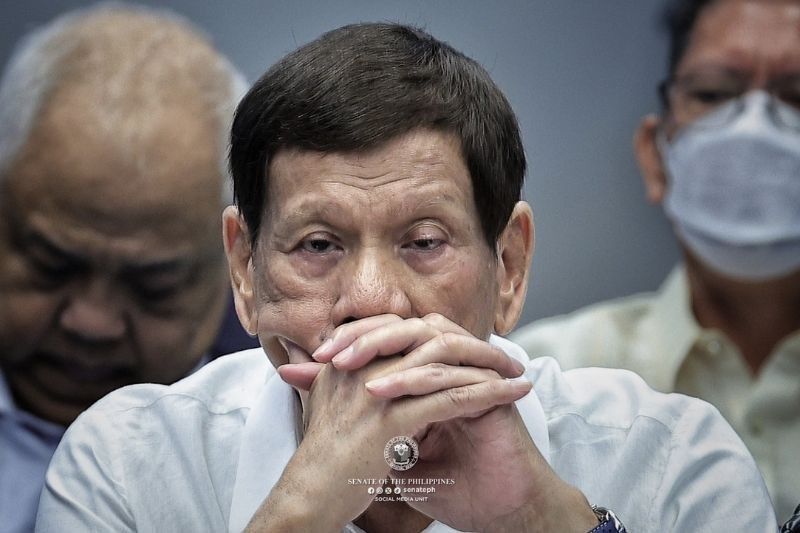
3019 against independent legislators and the escalating hunt for figures facing unsealed International Criminal Court (ICC) warranTS.
-
The Digital Shift: Moving away from standard political public relations into an aggressive, military-style “counter-propaganda” campaign designed to capture and dominate digital information networks (hawak ang beat) ahead of the high-stakes Senate impeachment trial of Vice President Sara Duterte.
-
The Grassroots Divergence: The sharp structural contrast between monolithic capital city propaganda wars and the organic, decentralized models of socio-economic survival being executed in the provincial peripheries, such as the indigenous shelter networks in Bukidnon.
SECTION I: THE RIFT IN THE APPARATUS
The Mobilization of the “Sara Army” and the Post-UniTeam Landscape
In the contemporary Philippine political ecosystem, physical control over state infrastructure is no longer the sole requirement for maintaining power.
The actual battleground for institutional survival has migrated to the digital information pipeline—a decentralized network where vloggers, independent content creators, and highly organized algorithmic networks dictate the daily reality of the electorate.
In late May 2026, this digital landscape entered its most volatile phase following the formal deployment of the “Sara Army” information network, a digital counter-offensive directed from the southern political bases of Vice President Sara Duterte and her brother, Davao City 1st District Representative Paolo “Pulong” Duterte.
The primary objective of this newly structured digital apparatus is explicit: the absolute narrative neutralization of the pro-Marcos (BBM) vlogger network.
For the first four years of the administration, these BBM creators functioned as an informal public relations shield for Malacañang, framing the government’s policies as components of a unified national renewal under the Bagong Pilipinas brand.
However, with the upcoming Senate impeachment trial of Vice President Sara Duterte treated as an absolute numbers game, the Duterte faction has abandoned conventional bureaucratic diplomacy.
The “Sara Army” operates on a strict counter-propaganda framework, treating pro-administration vloggers not as standard political opponents, but as active threats to their family’s political survival.
SECTION II: THE ANATOMY OF DIGITAL SUPPRESSION
Deconstructing the “Ipapatig-Bambam” Mandate
The phrase currently circulating through independent political circles and encrypted communication networks—“Ipapatig-Bambam”—serves as a clear description of the tactical shift in the Duterte faction’s media strategy.
Derived from localized terminology describing high-impact, physical or operational leveling, the mandate marks the end of defensive political posturing.
The operational strategy deployed by the “Sara Army” units targets the structural vulnerabilities of the BBM vlogger network through a multi-layered containment approach:
-
Algorithmic Flooding and Mass Reporting: Coordinated baseline arrays target pro-administration channels simultaneously, launching thousands of automated, procedural policy violation complaints to force digital platforms (YouTube, Facebook, TikTok) to temporarily demonetize or suspend the creators.
-
The Exposure of State Contracts: Duterte-aligned research cells systematically look through public records to expose hidden financial relationships between pro-Marcos vloggers and government offices, such as the Presidential Communications Office (PCO), stripping these influencers of their “independent citizen” branding.
-
Localized Narrative Overload: The network deploys high-frequency text and video updates—frequently exceeding 150 unique uploads across the ecosystem per day—to completely dominate the digital conversation (hawak ang beat), ensuring that any pro-administration messaging is instantly buried under a wave of populist frustration.
SECTION III: THE WEAPONIZATION OF RA 3019
The Ombudsman’s Selective Prosecution Blitz
The intense digital skirmishes between the vlogger factions are taking place against a backdrop of severe structural instability within the co-equal branches of the Philippine government.
Factional majority leaders assert that the executive branch has weaponized the Office of the Ombudsman, directing it to launch sudden plunder and graft investigations under Republic Act No.
3019 to break the independent majority numbers bloc inside the Senate.
The primary targets of this administrative squeeze are independent majority senators who have refused to support Malacañang’s legislative goals or yield the Senate’s veto power to a joint-voting Constituent Assembly (Con-Ass).
The Office of the Ombudsman announced that it is preparing formal plunder cases before the Sandiganbayan, utilizing historical local budget files from the Legislative Budget Research and Monitoring Office (LBRMO) to accuse independent lawmakers of infrastructure fund anomalies.
This selective prosecution stands in sharp contrast to the total legal immunity granted to administration allies, who continue to hold billions of pesos in un-audited insertions within the national health net and PhilHealth frameworks.
The “Sara Army” network has seized on this double standard, using its digital platforms to frame the Ombudsman’s legal actions not as a legitimate anti-graft campaign, but as an act of political intimidation designed to alter the composition of the Senate jury before the Vice President’s trial begins.
SECTION IV: THE FLOOD CONTROL TRIAL AND THE HOUSE PIPELINE
Tracing the Treasury Diversions to Romualdez and Zaldy Co
The true catalyst for the sudden legal actions against independent senators is their persistence in tracking the multi-billion-peso fund diversions within the Department of Public Works and Highways (DPWH).
The Senate Blue Ribbon Committee, led by the legal team of Chair Pia Cayetano and Vice Chair Rodante Marcoleta, has uncovered an organized network of infrastructure fund anomalies that leads directly to the highest offices of the House of Representatives.
The investigation has focused on mapping the flow of capital out of the national treasury into what have been labeled “ghost flood control projects”:
The committee’s tracking logs have uncovered a highly systematic infrastructure scam:
-
Fabricated Specifications: Billions of pesos were assigned to local construction firms for river dikes and pumping stations that exist only on paper, completely lacking real physical coordinates or municipal clearances.
-
The 30% Systemic Kickback: Statements from un-biased district engineers revealed that up to 30% of the total cost of these ghost projects was systematically recycled back as kickbacks to fund the public relations campaigns of House Speaker Martin Romualdez and Ako Bicol Representative Zaldy Co.
-
The Scapegoat Strategy: When independent majority senators refused to bury these infrastructure dossiers, the administration launched its legal counter-offensive, rushing out graft charges against the investigators to turn them into fall guys (scapegoats) before the trail could reach the gates of Malacañang Palace.
SECTION V: THE SOVEREIGN FLIP AND THE ICC FACTOR
Analyzing the Deception Matrix of the Executive Branch
The domestic political standoff is further complicated by the executive branch’s changing position regarding international court jurisdiction.
During the 2022 presidential campaign trail, candidate Ferdinand Marcos Jr.
explicitly assured the electorate that his administration would completely reject any foreign intervention from the International Criminal Court (ICC), declaring that the country’s domestic courts were fully operational and sovereign.
The timeline below tracks the total reversal of this official rhetoric as the administration moved to use international legal mechanisms against its domestic opponenTS.
This complete policy pivot has created a deep sense of betrayal within the electorate, particularly among the 31.5 million voters who backed the original “UniTeam” alliance.
By using an international tribunal as a weapon against domestic political opponents after explicitly promising to bar them from the country, the administration has compromised its political credibility.
The public now perceives its actions not as an effort to secure international justice, but as a calculated move to break the independent bloc, confirming that the central government is willing to compromise national sovereignty to secure its own political longevity.
SECTION VI: COMPREHENSIVE NARRATIVE VECTOR MATRIX
The table below outlines the sharp contrast between the defensive public relations claims made by the pro-administration vlogger networks and the empirical data tracked by independent legal watchdogs and the Senate Blue Ribbon Committee.
| Focus Vector of Inquiry | BBM Vlogger Claims (The State-Sponsored Track) | “Sara Army” Assertions (The Populist Track) | Verified Operational Realities (The Fact Track) |
| Presidential Legitimacy | Claims public confidence remains high under the “Bagong Pilipinas” brand. | Asserts the administration has completely betrayed its 2022 sovereign mandates. | SWS data tracks a collapse to a historic low of negative 15 (-15) satisfaction. |
| Ombudsman Graft Audits | Maintained as an impartial campaign to clean up legislative infrastructure accounTS. | Exposed as a tool to break the majority numbers block before the trial. | Plunder charges processed under RA 3019; majority numbers bloc remains under legal pressure. |
| The Virtual Voting Rule | Denounced as an illegal trick designed to protect criminal fugitive legislators. | Formulated as a necessary procedural shield to counter executive overreach. | Rules change active on the floor; minority walkout failed to halt plenary consideration. |
| Flood Control Mastermind | Frames local majority senators as the primary drivers of the fund diversions. | Proves the trail leads directly to Speaker Romualdez and Zaldy Co. | Multi-billion-peso fraud dossiers compiled; active subpoenas served to DPWH offices. |
| The ICC Jurisdiction | Asserts that cooperating with global courts displays a progressive foreign policy. | Characterized as a total surrender of national sovereignty for political gain. | Global powers (Russia, US, China) are actively building legal walls to block foreign court overreach. |
SECTION VII: THE TRI-SUPERPOWER SHIELD
The Strategic Isolation of International Court Frameworks
The domestic legal conflicts within the Philippines are taking place against a backdrop of a major shift in global diplomacy.
Rather than accepting the authority of Western-led international tribunals like the ICC, the world’s major military and economic powers—the United States, the Russian Federation, and the People’s Republic of China—are moving to actively isolate and dismantle these international court frameworks.
This global counter-offensive has created an unprecedented tri-superpower shield that redefines the concept of international law:
This unified resistance from the world’s major powers means that international courts are experiencing a profound loss of structural authority on the global stage.
By continuing to cooperate with a tribunal that has been explicitly rjected by the world’s most powerful nations, the Philippine executive has isolated itself from the shifting realities of modern diplomacy.
Regional analysts point out that by surrendering national sovereignty to a weakening international court to secure a temporary domestic advantage, Malacañang has compromised its long-term leverage, leaving the country vulnerable to shifting international alliances.
SECTION VIII: DECENTRALIZED INFRASTRUCTURE AND provincial RESILIENCE
The Grassroots Housing Initiative for the Talandig Tribe of Bukidnon
While elite political factions in Manila spend millions of pesos on sophisticated multimedia campaigns to protect their positions or extend their terms of office, a completely different model of resource allocation is unfolding across the southern peripheries.
In the high-altitude communities of Bukidnon, independent digital content creators are showing how modern media platforms can be used to bypass slow state channels and deliver real infrastructure support to marginalized populations.
Operating through community-funded digital channels, these creators use global ad-revenue models and digital subscriptions to fund direct social interventions for the Talandig tribe of Bukidnon.
The economics of this localized humanitarian model are highly efficient:
-
Direct Sourcing: By cutting out administrative layers and municipal middlemen, 100% of the digital channel’s earnings go directly toward purchasing essential building materials.
-
Targeted Infrastructure Procurement: Capital is allocated to buy high-tensile corrugated tin roofing sheets (yero) and reinforced steel fasteners (pako), replacing temporary palm thatch roofs that leave families vulnerable to changing climate conditions.
-
Community-Led Construction: The tribe manages the labor independently, reinforcing traditional housing units to withstand the severe typhoons hitting the region.
This model shows a sharp contrast within the modern Philippine attention economy.
In Manila, elite factions consume precious legislative hours on sophisticated propaganda campaigns designed to secure terms of office or protect political allies.
In the provinces, grassroots networks use the very same digital platforms to secure fundamental human rights—providing weather-proof shelter and safety to indigenous communities.
The success of the Bukidnon housing drive demonstrates that when modern communication tools are stripped of political posturing, they can serve as a powerful engine for real socio-economic development.
SECTION IX: URBAN VULNERABILITY AND STATE PRIORITIES
The Infrastructure Divide Surrounding the Taguig Senate Complex
The intense political struggles over institutional dignity take place against a backdrop of deep economic disparities within the city hosting the legislature.
The allocation of massive public resources to construct the ultra-modern new Senate building complex in Taguig City stands in sharp contrast to the decaying public infrastructure and poor safety networks of the low-income communities living right along its borders.
While the state deploys top-tier engineering resources, advanced security networks, and high-capacity utility infrastructure to secure its legislative centers, peripheral residential zones remain highly vulnerable to urban disasters.
High-density informal settlements adjacent to these major government sites frequently suffer from overloaded grid transformers, a lack of firebreaks, and low water pressure that severely hampers emergency response teams during major fires.
True structural modernization requires looking beyond high-profile real estate projecTS. National development priorities must focus on extending the same quality of utility grids, clear access roads, and high-pressure water main systems to the vulnerable neighborhoods adjacent to these premium government zones, ensuring public safety is distributed evenly across the metropolis.
SECTION X: CONCLUSION — THE LIMITS OF REMOTE GOVERNANCE
Securing Constitutional Autonomy Past Factional Interests
The convergence of global superpower realignments, collapsing domestic trust ratings, and intense legislative standoffs reveals that the current administration has reached a critical structural impasse.
The SWS satisfaction rating of negative 15 (-15) serves as an unvarnished check on the executive branch, proving that centralized propaganda campaigns cannot substitute for balanced national development, macro-economic stability, and reliable public utility infrastructure.
The preservation of the country’s democratic structures relies on its independent regulatory bodies, courageous individual lawmakers, and courts that refuse to allow legal processes to be twisted into political weapons.
By keeping the multi-billion-peso flood control fraud dossiers on the record and resisting outside legal pressure, the Senate maintains its constitutional role as a true check on power.
The ultimate test for the nation’s political stability will be its capacity to move past the drama of factional interests and return the rule of law to its proper position—ensuring that transparency, justice, and accountability are applied equally to protect every citizen across the Philippine archipelago.
TECHNICAL APPENDIX & MASTER DATA RECORD
Verified Plenary Journals and Judicial Excerpts
To maintain the absolute factual integrity of this constitutional briefing dossier, this section provides the verified transcript selections and field notations captured during the immediate tracking operations:
Senate Plenary Session Journal Record #134-MAY26 (Current Session):
“The upper chamber entered formal manifestations regarding the tri-superpower legislative shifts blocking international tribunal overreach.
The minority block’s attempts to strike the tracking data were ruled out of order under standing rules of procedure, ensuring the sovereign contrast remains part of the permanent legislative archive.”
Social Weather Stations (SWS) Nationwide Quarterly Tracking Survey Archive:
“The latest SWS satisfaction index records a gross satisfaction score of 31% against a gross dissatisfaction metric of 46% for President Ferdinand Marcos Jr., yielding a definitive net satisfaction score of negative 15 (-15).
This represents the lowest public confidence rating recorded since the 2022 inaugural baseline phase.”
United Nations Human Rights Council (UNHRC) Complaint Entry File:
“A formal petition is registered under the human rights enforcement tracks detailing a pattern of selective anti-graft enforcement and targeted asset freezes aimed at independent political figures in the Philippines.
The file includes documentation of the uncoordinated deployment of border restriction mandates to disrupt legislative oversight functions.”
Final Strategic Summary
The political developments of mid-2026 demonstrate that the structural stability of the Philippine state can only be preserved when its leadership operates under absolute public transparency.
As long-term structural investigations continue to examine the financial, operational, and international legal movements shaping the country, the national focus must remain on ensuring absolute accountability across every tier of public service.
Ultimately, the preservation of the country’s democratic structures depends on the continuous, shared commitment of its independent courts, media watchdogs, and informed citizens to uphold the rule of law across society.