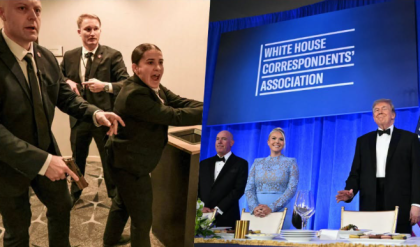
Every weekday, long before television cameras begin broadcasting live, one of the busiest rooms in Washington is already coming to life.
Inside the James S.
Brady Press Briefing Room at the White House, reporters from across the United States and around the world prepare for another day of covering one of the most closely watched administrations in the country.
During President Donald Trump’s administration, the briefing room has once again become one of the nation’s most active political stages—a place where policy announcements, breaking news, and unscripted exchanges often set the tone for the day’s headlines.

The day usually begins hours before the official briefing.
Correspondents arrive carrying laptops, notebooks, cameras, and countless questions.
Many have already spent the early morning reviewing overnight developments, reading policy announcements, speaking with sources, and coordinating with editors.
Television crews prepare live broadcasts while photographers position themselves for the next important moment.
The briefing room itself may appear modest on television, but it serves as the center of daily communication between the White House and the press.
Rows of assigned seats are filled by representatives from major television networks, newspapers, wire services, radio organizations, and digital publications.
Behind them sit additional credentialed journalists hoping to ask questions if time permiTS. The White House press secretary decides which reporters are called on during each briefing, while seating traditions have historically given prominent organizations greater visibility.
When the briefing begins, conversations quickly give way to focused attention.
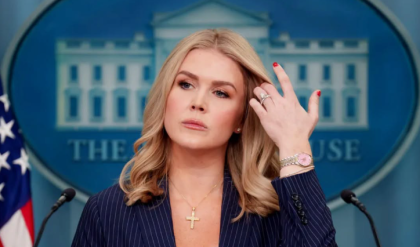
Under the Trump administration, Press Secretary Karoline Leavitt has frequently faced rapid-fire questions covering everything from domestic policy and international affairs to executive orders, economic developments, and the President’s daily schedule.
Briefings can last anywhere from several minutes to well over an hour, depending on the news of the day and the number of questions.

Unlike carefully scripted speeches, press briefings are often unpredictable.
A single unexpected question can lead to extended exchanges, requests for clarification, or follow-up questions from multiple reporters.
At times, discussions become tense.
At other moments, humor breaks the atmosphere.
Regardless of tone, every answer is recorded, analyzed, and reported almost immediately.
Within minutes, headlines begin appearing across news websites and television broadcasTS.
Outside the briefing room, another important system operates quietly.
The White House press pool follows the President throughout the day, accompanying him to meetings, departures, arrivals, ceremonial events, and official announcemenTS.
Pool reporters document what happens even when only a limited number of journalists are physically present, ensuring that information is quickly shared with the entire White House press corps.
One feature that has drawn particular attention during President Trump’s administration is the frequency of spontaneous media interactions.
Whether walking across the South Lawn toward Marine One, welcoming foreign leaders, or departing the White House, President Trump has often paused to answer questions directly from assembled reporters.

These informal exchanges—commonly known as “gaggles”—have frequently generated major news stories without the need for a formal press conference.
For journalists, however, the work extends well beyond asking questions.
Immediately after a briefing ends, reporters rush to verify quotes, confirm details, contact additional sources, and prepare stories before competing outlets publish their own coverage.
Television correspondents often step outside the briefing room for live broadcasts, while newspaper and digital reporters begin writing articles under tight deadlines.
Every minute matters.
Throughout the day, the atmosphere constantly shifTS.
Breaking developments can require additional briefings.
Cabinet secretaries may appear unexpectedly.
Executive orders may be signed in the Oval Office.
Foreign leaders may arrive with little advance notice.
Correspondents remain ready to move quickly from one location to another inside the White House complex whenever news develops.
Despite political disagreements that sometimes dominate public attention, the relationship between the White House and the press remains an essential part of American democracy.
The administration seeks to explain its policies and priorities.

Journalists seek answers, clarification, and accountability on behalf of the public.
That ongoing exchange—sometimes cooperative, sometimes contentious—has long been a defining feature of presidential administrations.
As evening approaches, many correspondents continue working long after the cameras stop rolling.
Articles are updated as new information becomes available.
Interviews continue.
Plans begin for the following day’s coverage.
Then, early the next morning, the process starts all over again.
For visitors watching a briefing on television, the room may appear to be active for only an hour or two each day.
In reality, it functions as the nerve center of White House reporting, where preparation, verification, and constant communication continue from morning until late at night.
During the Trump administration, that environment has become even more dynamic, with regular briefings, frequent presidential interactions with reporters, and a fast-moving news cycle ensuring that almost every day inside the White House press room has the potential to become part of American political history.